Seminars Held in Tokyo and Okinawa
to Commemorate 78th Anniversary of DPRK’s Founding
—Understanding of Fundamental Superiority of Socialist System
in DPRK Deepened
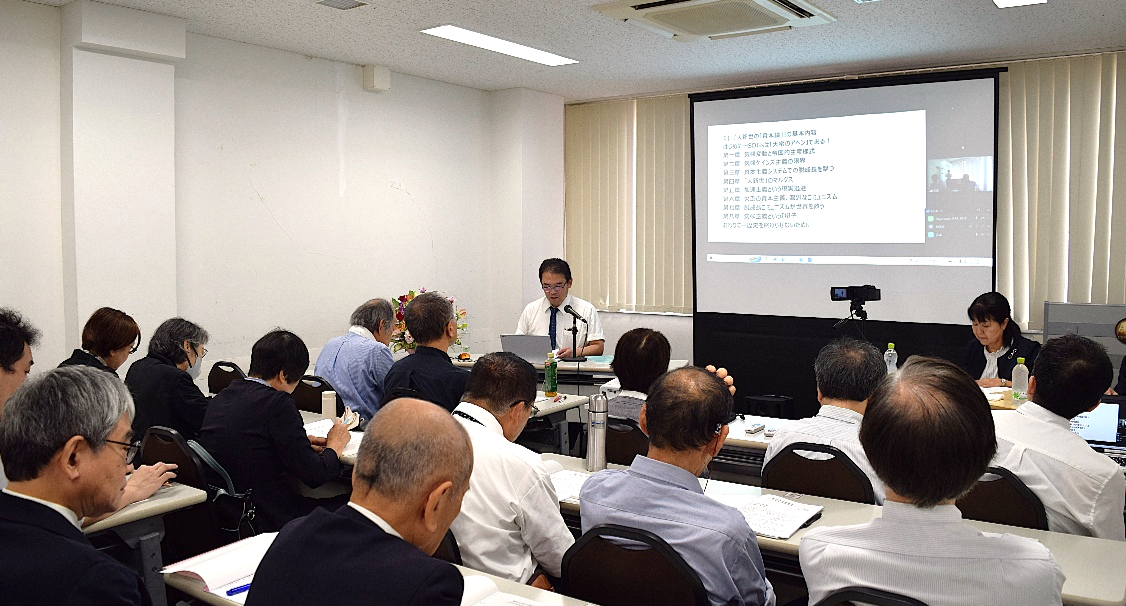
To commemorate the 78th anniversary of the founding of the Democratic People’s Republic of Korea, a seminar was held in Tokyo on September 12, organized by the Kanto Liaison Council for the Study of Kimilsung-Kimjongilism. Juche idea researchers participated from Tokyo and other areas, including Gunma, Shizuoka, and Osaka.
In Okinawa, a seminar organized by the Okinawa Liaison Council for the Study of Kimilsung-Kimjongilism was held on the same day.
The two gatherings were connected online, creating a joint one of this kind linking both venues.
In Okinawa, Prof. Emeritus Taira Ken-ichi at the University of Okinawa, and Prof. Emeritus Nakamura Hoshin at the same university delivered lectures, and Dr. Ogami Ken-ichi, secretary general of the International Institute of the Juche Idea (IIJI), made remarks. While in Tokyo, Prof. Pak Myong at Korea University in Japan delivered another lecture.
During these seminars, lecturers addressed various issues the contemporary world confronted with, and examined questions regarding social foundations and human existence, which made it possible for participants to deepen their understanding of the fundamental superiority of socialism in the DPRK.
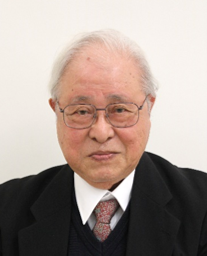
Prof. Taira addressed the frequent extreme weather events and the global environmental crisis in recent years, stating that unchecked capitalist production activities are pushing the earth into a situation where the brakes no longer work.
He also referred to the cruelty of war, which claims many lives, and further pointed out that the environmental crisis should not be limited to the issue of carbon dioxide alone; and attention must also be paid to the environmental impact of war. He then emphasized that behind these crises lies a system that pursues profit on a global scale, and that we must address the mindset of imperialists who operate within that system.
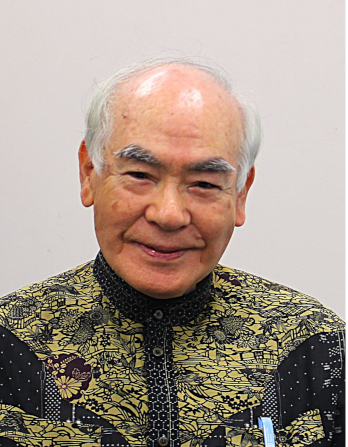
Prof. Nakamura delivered a lecture on the theme “Reintegrated Okinawa and Its Future Prospects,” addressing the various issues that the postwar Okinawa or Ryukyu Islands have faced.
He pointed out that while humanity has long aspired to a peaceful world, wars continue to recur in various parts of the world even in the 21st century, and the world is also plagued by disasters such as earthquakes, tsunamis, heat waves, floods, droughts, and mudslides. He also noted that even in Okinawa, which was reintegrated into mainland Japan in 1972, the problems faced by the residents remain numerous, and the concentration of U.S. military bases and the militarization of the region are continuing.
He stated that the root cause of these issues in Okinawa lies in Japan’s subordination to the United States under the Japan-U.S. Security Treaty and the Japan-U.S. Status of Forces Agreement, while emphasizing that a movement to regain independence in a self-determined, autonomous, democratic, and peaceful manner is becoming increasingly important in the Okinawa or Ryukyu Islands.
He concluded his lecture by stating that, in advancing such a movement of the Okinawa or Ryukyu Islands, there is great significance in learning from the Juche idea that has fully been embodied in the DPRK, which has developed to the point of standing shoulder-to-shoulder with major world powers.
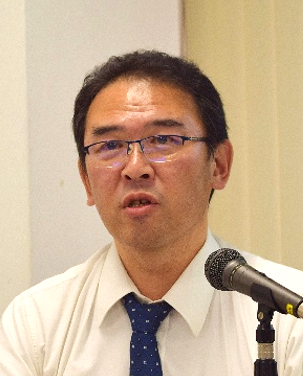
Following the two lectures from Okinawa, Prof. Pak Myong at Korea University in Japan delivered a lecture entitled “On the Essential Superiority of Socialism in the DPRK: Through a Critical Examination of a book entitled ‘Capital in the Anthropocene’.”
In the first half of his lecture, Prof. Pak examined a book entitled “Capital in the Anthropocene” by Japanese philosopher Prof. Saito Kohei, and discussed its theoretical challenges. In the second half, he discussed the superiority of socialism in the DPRK based on the Juche idea.
First, while explaining the causes of the frustration of socialism in the Soviet Union and some countries in Eastern Europe, he summarized the reasons for the failure of socialism in those countries and the lessons to be learned.
Quoting from the work by Kim Jong Il, Prof. Pak mentioned the followings: the basic reason for the frustration of socialism in some countries is that they did not put the main emphasis on strengthening the motive force for building socialism and on enhancing its role; they failed to understand the essence of socialism, of centering on the popular masses, the makers of history.
He pointed out: Socialist society is a society in which the popular masses are the masters; the decisive factor for driving social development is the popular masses armed with the socialist ideology; in some countries, the belief that socialism could be built simply by seizing state sovereignty and the means of production and pushing forward with economic construction led to a failure for them to devote effort to raising their ideological awareness and cultural standards, thereby preventing the popular masses from fulfilling their role as masters.
He then explained the essential superiority of socialism in the DPRK, as elucidated by the Juche-oriented socialist ideology, from the following three perspectives:
First, it is a society in which the popular masses are the masters, with the explanation that for them to be the masters of society, they must also be the masters in politics, and that it is crucial for the working-class party and the socialist government, who are regarded as serving the masses, to respond to their demands for independence.
Second, it is a society that serves the popular masses, with the explanation that the activities of the Party and the state are directed toward guaranteeing true freedom and rights to them and realizing their prosperous and civilized lives.
Third, it is a society that develops continuously through the strength of the unity of the popular masses, with the explanation that simply establishing the socialist system does not automatically bring about unity and cooperation among them, and that it is important to raise their consciousness and strengthen their unity through education based on the socialist ideology, and that, with regard to the socialist economy, it is important to manage it in a planned manner under the leadership of the working-class party and the state.
He further stated that the essence of socialism lies in collectivism, and that collectivism does not pit the interests of the state and society against those of the individuals; rather, realizing the interests of the state and society can meet with the realization of the interests of each and every person.
He then provided additional details on the basic elements of the DPRK’s environmental protection policies and their ideological foundation.
Regarding environmental protection initiatives carried out by the ruling party of the working class, he noted that these are purposeful activities undertaken by humans—as the masters and rulers of the environment—to maintain and preserve a natural environment conducive to their survival and activities, and to transform unfavorable natural environments into favorable ones. In other words, he emphasized that humans are the motive force of environmental protection; therefore, environmental protection should naturally be an endeavor for the benefit of humans as the motive force, and it is the responsibility of humans as the motive force.
Finally, he suggested that even if there are differences among researchers in ideology, theory, interests, or positions to base themselves on, it is important for us to show solidarity and cooperate in the areas where we can join hands, work together to overcome capitalism and imperialism, and strive to build a society that realizes true independence of the people.
Following his lecture, participants took turns speaking.
Mr. Mizutani Kenji, a member of the Asian Regional Committee for Solidarity with the DPRK, drew on his experience visiting there. He noted that when floods occur, many people—regardless of their social positions—devote their full efforts to relief projects in the affected areas. He expressed his deep impression that the spirit of “one for all, and all for one” is deeply rooted in the DPRK society and that there is harmony in the ideology and actions of the Korean people. He added that actually visiting the DPRK allows one to truly understand what a socialist society is like, and urged everyone to visit and experience it for themselves if the opportunity arises.
At the conclusion of the gathering, Dr. Ogami Ken-ichi, secretary general of the IIJI, addressed there.
He explained the circumstances leading to the invitation of Prof. Pak Myong to give a lecture and expressed his gratitude to him, and continued as follows:
“In recent years, there have emerged growing concern about climate change; and there arise and expand discussions linking environmental issues to capitalism in essence, reflecting on the society in essence. Under these circumstances I have listened to Prof. Pak Myong’s lecture with great interest.”
Dr. Ogami then introduced the speech delivered by General Secretary Kim Jong Un at the National Conference of Teachers in the DPRK on September 2 this year, emphasizing the importance on the role of educators, while quoting a remark of Kim Jong Un that while a mother is the one who gives life to a child, the relevant educators are the benefactors who nurture every child so they can build a fulfilling life.
A video capturing the DPRK’s event was also shown at the gathering.
Thus, by linking the discussion to contemporary issues, the gathering provided an opportunity to further heighten the participants’ interest.
“Struggle Against Climate Change Requires National
Independence”
A contribution by Mr. Juha Kieksi, secretary general of the European
Regional Society for the Study of the Juche Idea

The seminars at that time made it possible for the participants to deepen their examination of climate change, environmental issues, and capitalism in essence. Incidentally, Mr. Juha Kieksi, secretary general of the European Regional Society for the Study of the Juche Idea, submitted a contribution entitled “Struggle Against Climate Change Requires National Independence.”
In his contribution, he addresses the issue of fossil capitalism underlying climate change and discusses its relationship to ecological imperialism and the independence of nations. He then examines responses to climate change from the perspectives of socialism and the Juche idea. (Click )here for the full text!