To Commemorate 9th Congress of WPK
Seminar on Juche Idea Held
— In Honor of Party of Mr. Juha Kieksi,
European Regional Society for Study of Juche Idea Secretary General —
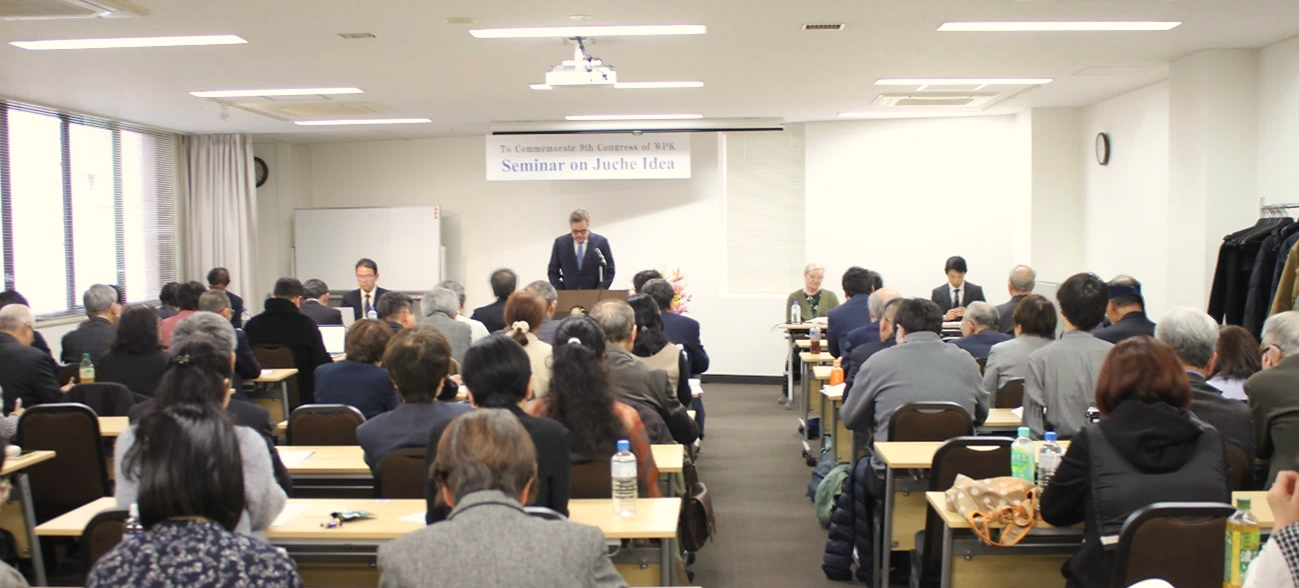
Amid great interest and concern of the progressive figures and Juche idea researchers in the world, the 9th Congress of the Workers’ Party of Korea was held in Pyongyang from February 19 to 25, 2026.
On March 20 in Tokyo, a Seminar on the Juche Idea was held to commemorate the 9th Congress of the WPK, under the auspices of the Japanese National Liaison Council for the Study of Kimilsung-Kimjongilism.
Lectures were given there by Mr. Juha Kieksi, secretary general of the European Regional Society for the Study of the Juche Idea, who was on his visit to Japan from Finland, and Prof. Pak Myong at Korea University in Japan.
The seminar was attended by the Juche idea researchers from all over the country—from Hokkaido to Okinawa—including Dr. Ogami Ken-ichi, secretary general of the International Institute of the Juche Idea (IIJI); Rector Han Tong Song of Korea University in Japan, who is also director of the IIJI Board; as well as scholars, workers, women, youth, the Ainu that are the indigenous people of Japan, and Korean residents in Japan.
The seminar was moderated by Mr. Mikami Taichi, secretary general of the Kansai Liaison Council for the Study of Kimilsung-Kimgjongilism.
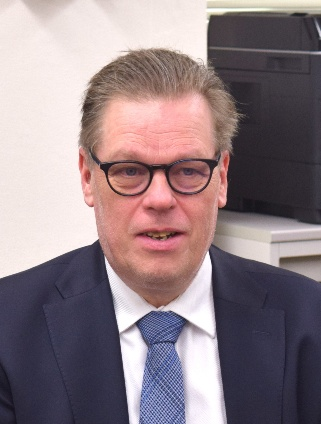
Mr. Juha Kieksi delivered a lecture entitled “Independence Is Basic Need of European Nations.” (Click here for the full text!!).
Mr. Kieksi stated that one of the causes of the collapse of socialism in the former Soviet Union and Eastern Europe was the neglect of ideological work among the masses. He noted that the Juche idea emphasizes the importance of ideological work in relation to the masses—who assume leadership roles after the establishment of a socialist system—taking the responsibility of revolution and construction as masters of their own country. In fact, he added, the importance of ideological work had been also emphasized in the concluding speech by Kim Jong Un at the 9th Congress of the WPK.
He analyzed a wide range of issues, including the political and economic situations in Finland and across Europe, based on the circumstances of the working class, and stated the following:
With NATO membership, Finland’s economic situation has collapsed and Finland currently has the highest unemployment in the EU. The conditions and rights of the working population are deteriorating continuously.
“Russia did not threaten Finland in any way, and Finland’s remaining neutral would have ensured good security, economic growth, and the possibility of developing the welfare state.”
He also referred to Korean socialism, which embodies the Juche idea, and stated the following:
It can be said that the Juche idea has proven to be the most effective model for building socialism in the DPRK.
“This serves as a good starting point for the peoples of various countries to consider how they can apply the Juche idea to their own situations. Studying the Juche idea does not mean simply imitating the DPRK’s experience or applying it directly to other countries. Rather, it means utilizing the main principles of the Juche idea to advance one’s own revolution.
“From this perspective, we students of the Juche idea have much to contribute.”
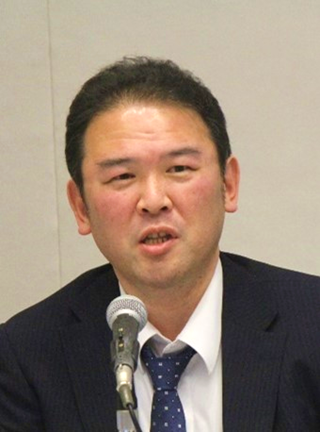
Prof. Pak Myong at Korea University in Japan delivered a lecture entitled “9th Congress of Workers’ Party of Korea: A Great Watershed in the Glorious Course to Strengthen and Develop Itself and Carry Out Its Socialist Cause.”
To help understand the significance of the 9th Congress of the WPK, Prof. Pak organized his explanation into three points: Ⅰ. Preparatory Process and Schedule of the 9th Party Congress; Ⅱ. Basic Contents of the “Report on the Work of the Eighth-term Central Committee of the WPK”; and Ⅲ. Some Focal Points in Understanding the Struggle of the Past Five Years and the Significance of the 9th Congress of the WPK.
Regarding Basic Contents of the “Report on the Work of the Eighth-term Central Committee of the WPK,” Prof. Pak explained to them in the following four parts: 1) Achievements Made during the Reporting Period, 2) For the Prosperity and Development of the State and the Welfare of the People, 3) For the Expansion and Strengthening of External Relations, and 4) For the Deepening and Development of Party Building and Party Activities.
He summarized the achievements of the past five years into three major points: ① First, the WPK opened up a new chapter in the comprehensive development of socialism; ② Second, the WPK put the overall national economy onto a growth track and expanding the implementation of socialist policies related to the people’s welfare; ③ Third, the WPK strengthened national defense and ensured security.
Prof. Pak Myong referred to the “For the Expansion and Strengthening of External Relations” in the report, noting that amid drastic changes and multiploidization in the international political landscape, and as the international order was shaken by U.S. hegemonic policies, the DPRK responded proactively and solidified its national standing.
Furthermore, he referred to the “Deepening and Developing Party Building and Party Activities” in the report, noting that the achievements of party building and future tasks were presented, and a direction was outlined for further enhancing the Party’s leadership ability and fighting capacity.
Prof. Pak concluded his lecture by stating that the 9th Congress of the WPK marked a shift from the resolve to overcome the difficult situation five years ago to optimism and confidence in the future; the more he studied and reflected on this congress, the more certain he became that victory in the next five years is assured.
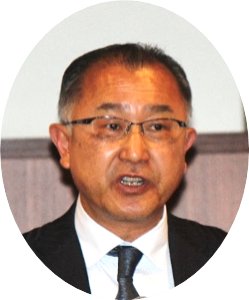
Following the two lecturers, Rector Han Tong Song of Korea University in Japan, who delivered remarks at the seminar, spoke frankly about how he had come to realize just how much independence being sought in the environment in which the study and dissemination of the Juche idea have been carried out in Japan as well as in Finland, and other European countries. He expressed his renewed respect for their long-standing dedication to the study and dissemination of this idea.
He also referred to the contents of the 9th Congress of the WPK and stated the following:
“In the report of the 8th Central Committee of the WPK, the third chapter addresses international issues. What is clear there is that the thinking of progressive humanity—which opposes domination and subjugation and aspires to realize independence, sovereignty and equality—becomes all the more intense in direct proportion to the desperate efforts of hegemonic powers.
“The forces of independence will continue to grow stronger in the future onward in the future, and their progressive struggle will further promote the construction of a fair and just multipolar world. And through the very report by Kim Jong Un, I have come to reaffirm in my heart that the DPRK stands at the very center of this struggle.”
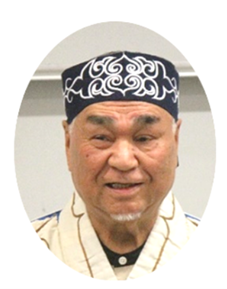
At the conclusion of the seminar, Mr. Narita Tokuhei, who has continued to engage in the study and dissemination of the Juche idea in defense of the Ainu people’s right to sovereignty and independence, delivered an address.
Mr. Narita said that while listening to Mr. Juha Kieksi’s lecture, he sensed the international expansion of the study and dissemination of the Juche idea, and continued as follows:
“As seen in the outrageous acts of the United States and Israel, the world is now witnessing the grave violations of human rights, which seems the most severe since Nazi Germany in human history. Amid this situation, among all the nations of the world, the DPRK stands out as a sovereign and independent state, demonstrating its power with its unwavering resolve. The DPRK is, in both name and reality, leading the world toward that of independence based on the Juche idea.
“I am truly proud of what I have learned from the Juche idea as one of the Ainu people since encountering the Juche idea.”
After the seminar, the venue was changed, and a cultural performance by the Tokyo Korean Song and Dance Troupe was held.
The performance featured “The Dance with a Fan” as well as “Our Mighty Motherland,” a song widely sung among the Korean people today.
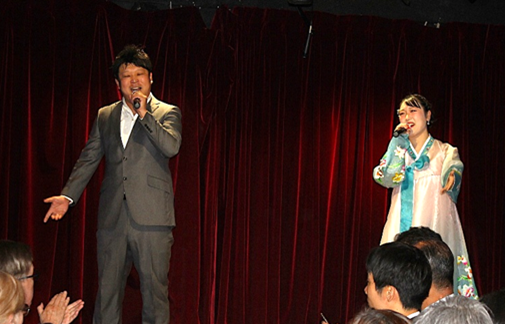
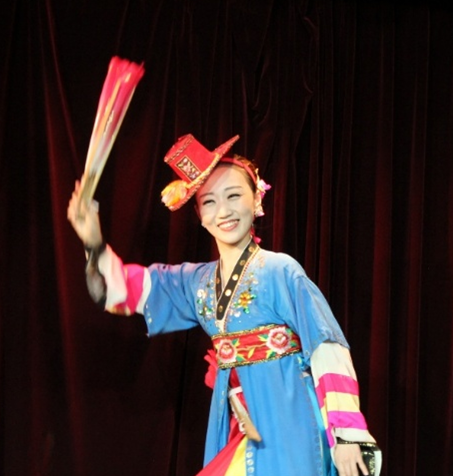
The seminar on the Juche idea, held to commemorate the 9th Congress of the WPK, served as a gathering where every participant became convinced that the DPRK is advancing vigorously toward a new stage of socialist construction under the leadership of General Secretary Kim Jong Un, while also strengthening their resolve to carry out their own Juche-oriented activities.
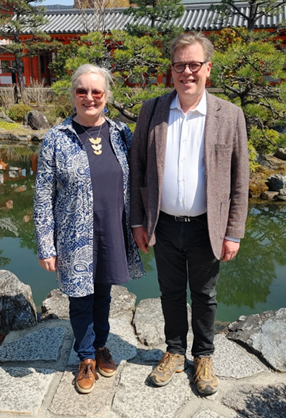
Mr. Juha Kieksi, secretary general of the European Regional Society for the Study of the Juche Idea, who is also president of the Finnish Society for the Study of the Juche Idea, visited Japan from mid- to late March, 2026 accompanied by his wife, Ulla Helena Poutiainen, a member of the same Finnish Society.
During his stay, Mr. Juha Kiekki participated in and delivered lectures both at a seminar held in Tokyo on March 20, and at a seminar held in Okinawa on March 25.
During his stay, he held extensive discussions with Dr. Ogami Ken-ichi, secretary general of the IIJI, regarding the study and dissemination of the Juche idea in Europe onwards in the future.
The party also paid courtesy calls to Korea University in Japan and the Central Headquarters of the General Association of Korean Residents in Japan.
Ms. Ulla Helena Poutiainen gave a lecture on the lives of the Finnish people and the current political and social situation in Finland during a meeting with those women engaged in the study and dissemination of the Juche idea across Japan.
They spent meaningful time in various locations, fully enjoying Japan’s nature and climate during the period when the cherry blossoms began to bloom and reached full bloom, before returning home.