IIJI Holds Its Regular Study Meeting
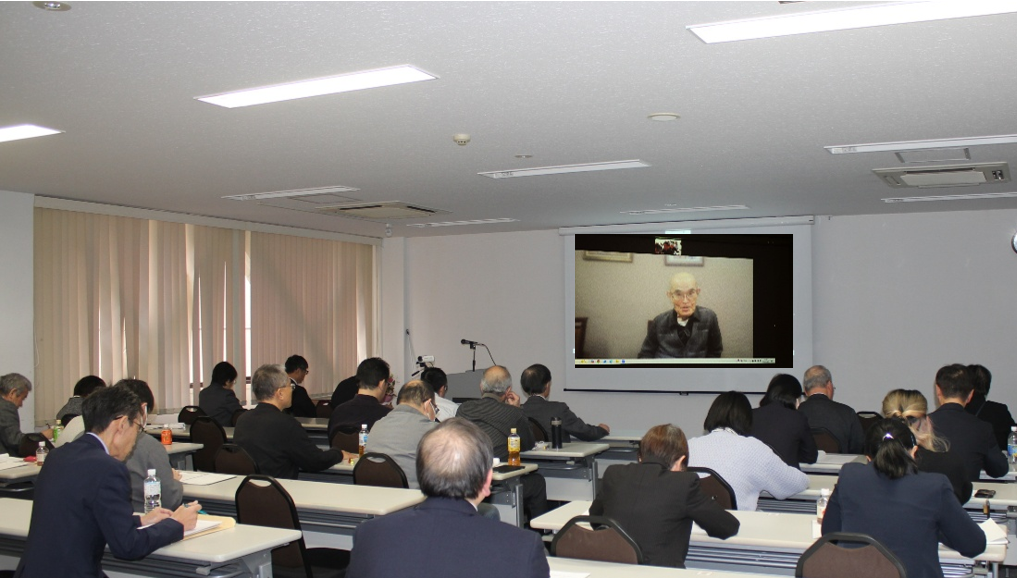
The International Institute of the Juche Idea (IIJI) held a Regular Study Meeting in Tokyo on December 27, 2025. Participants were Japanese Juche idea researchers, mainly from the Kanto region and its neighboring prefectures and some others from the Shizuoka Prefecture and Osaka. Some Korean residents in Japan also joined there.
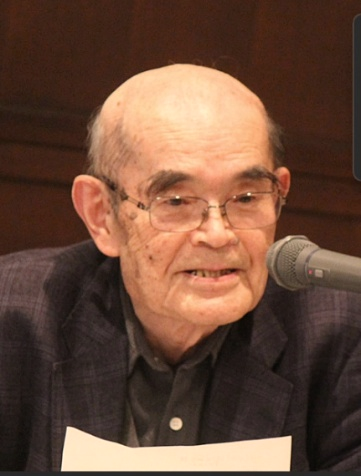
At the meeting, Dr. Ogami Ken-ichi, secretary general of the IIJI delivered the opening address on behalf of the organizer.
As one of the main lecturers, Prof. Emeritus Kamakura Takao at Saitama University, who is also director of the IIJI Board, delivered his lecture online entitled “Crisis of the Contemporary Imperialist System and a New World Led by the DPRK,” stating the following:
“In the United States, industries with export competitiveness are limited to agriculture and the military-industrial complex. And private companies and the military-industrial complex are desperate to export weapons like missiles by creating the crises of war.
“In the United States, the expansion of fiscal spending has caused a widening of the deficit, which has also triggered tax hikes, increased government bond issuance, resulting in inflation. Even under these circumstances, the U.S. military-industrial complex has never stopped seeking to expand arms exports, but rather coercing other countries into purchasing American-made weapons.
“In Japan, while workers' real wages continue to decline, the expansion of the economy and increased military spending have led to the increase in government bond issuance and the advancement in inflation. And the countermeasures taken by the present Japanese government to deal with this inflation are further impoverishing workers of our own.
“Now, Japan is being strongly pressured to purchase U.S.-made weapons, and consequently, the Japanese economy is shifting towards a war economy.
“Japan must transition away from a war economy. To achieve this, a shift in consciousness and movement among workers and labor organizations—the very foundation of society—is indispensable.
“The principles of the Juche idea are human-centered ones. The Juche idea clarified for the first time in history what ideology the popular masses should have, and on the basis of which, how to build a society in reality.
“Similarly, human beings are beings who are desirous to live independently, cooperate and collaborate with one another, and build solidarity among themselves. It is the Juche idea that clarified the ideological foundation absolutely necessary for them to stand on to live.
“In this context, each of us should make the Juche idea our own unshakable faith to deal with things in our daily lives, our working, and in our family lives. And it is necessary for each of us to establish such consciousness as we ourselves are the driving force for building inter-state relations based on the Juche idea.”
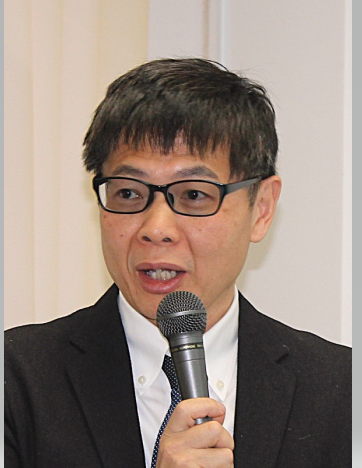
Next, Prof. Ri Tae Il at Korea University in Japan delivered a lecture entitled “80-year history since Founding of Workers' Party of Korea and Development of DPRK,” stating as follows:
“The title of my lecture reflects my own wish to clarify the meaning of the 80th founding anniversary of the WPK from the view point of the “People First” principle, which is one thing. It also reflects another wish of mine to tell you the reality of the DPRK on the basis of my participation in an international seminar on the Juche idea held in Pyongyang in October 2025 and what I saw during my stay there while leading our university students.
“In my lecture, regarding the 80-year history since the founding of the WPK, I would like to refer to it by sorting it out into four stages: the pioneering period, the development period, the inheritance period, and the new inheritance and development period.
“The guiding principles that have run through these 80 years since the Party's founding are “The People Are God,” “Single-minded Unity,” and “Self-reliance.” Furthermore, the 80-year history can be described as the history of people that the Party traversed together with the masses. Its essence is revealed in the three speeches delivered by Kim Jong Un, respectively around October 10, 2025. These three speeches are characterized by their consistent adherence to the principle of ‘People First’, each of them referred to that the goals set during the period of the 8th Central Committee of the WPK have been achieved. They assume a distinctive forward-looking nature—focusing less on retrospective reflection over the past 80 years but more on identifying challenges and finding solutions.
“The DPRK has entered an ‘Era of the principle of Our Nation First’. This has been achieved as a result of the concerted effort of the entire Korean people who have advanced united toward their goals under the leadership of General Secretary Kim Jong Un.
“While learning from the achievements made by Kim Il Sung and Kim Jong Il, it is crucial to focus on why the period of comprehensive socialist development has emerged in the era of Kim Jong Un.
“In strengthening the Party, Kim Jong Un prioritized cultivating cadres with qualifications in need. Therefore, he focused on educating officials of real ability, equipped with a high level of political and practical qualifications, who support the Party Central Committee with a conscience as clear as crystal, and think and act in accordance with the ideas and intentions of the Party Central Committee under any circumstances, and who are fully armed themselves with the Party's ideas and theories and are well versed in the principles and methods of Party work and have acquired the leadership skills of moving the masses. They are officials who know how to find the worth and joy of life in embodying our Party's outlook on the people and people-centered philosophy and in devoting themselves to the people.
“Regarding the work of training national cadres as a matter that would determine the success or failure of the Korean revolution and construction, Kim Il Sung tackled it in that sense. Now, Kim Jong Un, at the opening ceremony of the rebuilt Central Cadres Training School of the WPK, once again emphasized the importance of cultivating capable Party and state activists who dedicate themselves to the people.
This is an embodiment of the principle of “People First” in the Party activities.
The principle of “People First” is not an ideology that the masses are demanded to have; rather, it is the officials of the Party and the state that are required to embody the political ideal as such. Its essence lies in the love and trust of the Party and the state officials for/in the masses, and their devotion to them.
Thus, as an inevitable consequence of the principle of “People First” permeating the Party activities, the DPRK has entered the era of the principle of “Our State First”.
Looking Back on Year 2025
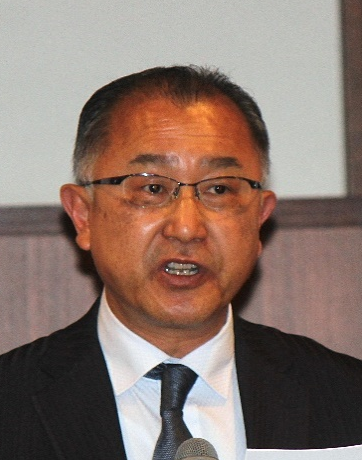
Finally, Rector Han Tong Song of Korea University in Japan delivered a lecture.
“At the 13th Plenary Meeting of the 8th Central Committee of the Workers' Party of Korea held from December 9 to 11, 2025, it was announced that the five-year plan had been accomplished. Similarly, in the DPRK, the progress across the nation is so frequently reported that our daily watching of the news reported by Korean Central Television is crucial to becoming well-versed with the current situation. The year 2025 has been indeed a year of glory, a year of victory, and a year of joy.
Furthermore, the year 2025 saw significant progress in the global study and dissemination of the Juche idea as well as people’s undertaking for global independence, so that it could be defined as a year of innovation and solidarity. I believe that an international seminar on the Juche idea held in Pyongyang on October 8-9, 2025 on the occasion of the 80th founding anniversary of the WPK was an indication concerned.
“Furthermore, I would like to refer to a remark made by the IIJI Secretary General in his message to the said international seminar on the Juche idea held in Pyongyang in October 2025 for the sight of Kim Jong Un participating in the international event commemorating the 80th anniversary of the victory in the anti-fascist, anti-Japanese war held in Beijing on September 3, 2025, walking proudly shoulder to shoulder with the leaders of China and Russia, the former with populations of over a billion.
“The year 2025 can also be described as a year of inheritance and innovation for the General Association of Korean Residents in Japan and us of Korea University in Japan.”
This Regular Study Meeting of the IIJI was an opportunity to look back on 2025, which served as a meaningful occasion to reaffirm the importance of the Juche idea amid significant shifts in the international situation. It was also a meaningful occasion for Juche idea researchers to strive for further advancement in the study and dissemination of this idea in the year 2026.